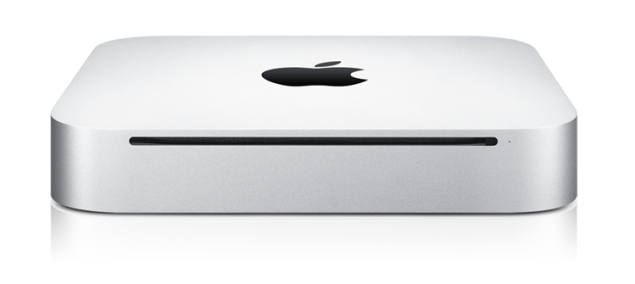
Can we just say that this was the most neglected part of Apple’s entire lineup? Well, until today, that is. Apple redesigned the box to be used the way people actually use it – as a small, efficient server or as a beefed-up TV device, complete with all the necessary ports to make it a part of your living room. We approve. source
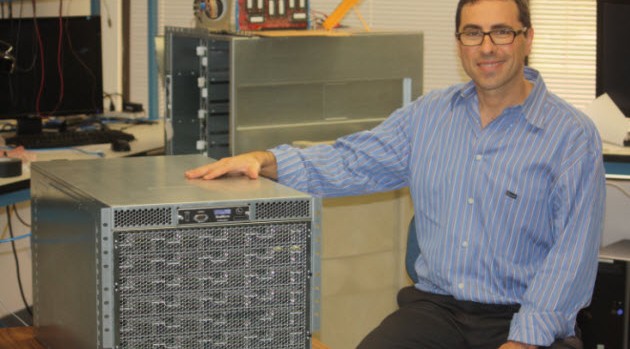
See this smug bastard? Wondering why he’s so smug? Well, his company, SeaMicro, just blew up the server industry. This device he’s sitting next to uses hundreds of Intel Atom chips – 512 to be exact – to create supercomputer-level performance with a lower energy footprint than traditional servers. Why does Intel Atom sound so familiar? Oh yeah, those are the chips that they use in slow, low-power netbooks. Nice idea. source
If not for our firm talking about the exploit to third parties who subsequently notified them, they would have never fixed it. We know what we did was right.
Goatse Security representative Escher Auernheimer • Responding to a letter from AT&T notifying its users of the iPad security breach the group found last week. AT&T called his group malicious hackers who wanted publicity. (You’d think the name was enough for that, but …) Auernheimer, on the other hand, called AT&T out for taking a number of days to actually inform its users of the breach. Expect some sort of legal action soon. source
I couldn’t just not do anything, knowing lives were in danger. It’s classified information, and when you play Russian roulette, how do you know there’s not a bullet in the next chamber?
Hacker Adrian Lamo • Discussing his decision to tell federal agents that he suspected Bradley Manning was leaking information to WikiLeaks. Since then, it’s been anything but fun and games for Lamo, nicknamed the “homeless hacker” for his fairly transient lifestyle. He’s gotten death threats. People have been ordering pizzas under his name. He’s reviled in the hacker community. And before this, he was simply famous for being the guy who hacked into the New York Times. source
$3
billion amount that was spent to decode the human genome, a project finished a decade ago
not
much the project’s benefit to the medical world since then (its original selling point) source
» Clarification: While the completion of the Human Genome Project led to Bill Clinton saying that it will “revolutionize the diagnosis, prevention and treatment of most, if not all, human diseases,” it hasn’t led to direct cures but perhaps more informed answers. It’s becoming clear to some that rare variants, not common genes, are likely the cause of many diseases. Meaning it’s not a silver bullet but a definite starting point. “Genomics is a way to do science, not medicine,” said Harold Varmus, the incoming chair of the National Cancer Institute.
Some social-media fans may disagree, but outside of ornithological contexts, ‘tweet’ has not yet achieved the status of standard English. And standard English is what we should use in news articles.
New York Times standards editor Phil Corbett • For some reason fighting the flow of the English language, which has already decided to call Twitter posts “tweets” (lowercase). Corbett calls the word “inherently silly” and says it’s possible people may not even be using the site in a year. OK, this would be fine if he had any good recommendations. But what does he come up with? “But let’s look for deft, English alternatives: use Twitter, post to or on Twitter, write on Twitter, a Twitter message, a Twitter update. Or, once you’ve established that Twitter is the medium, simply use ‘say’ or ‘write.’ ” In other words, he has no good ideas for what to call this thing that he’s railing against. How about we call it “tweet,” Phil? Seems like a reasonable name. It also seems dumb for a guy who uses “ornithological” to complain about the clarity of language. source