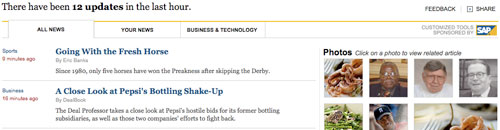
In times of recession, online ads get bigger. MSNBC is among the first in a long line of advertisers to switch to wide-format ads that take up full pages and recede, that make sidebars ultra-huge and makes it so that they never go away, ever. They’re all part of a group called the Online Publishers Assocation, which has agreed to use these ads. We have a feeling reading articles on the Internet is going to get annoying, but at least these sites aren’t charging. *sigh* source
There was all the talk at the time about how the stimulus package wasn’t big enough, and that is true here. It’s barely letting us keep our noses above water.
Bill Lyne • Faculty union president of Western Washington University in Bellhingham, Wash. His school is bracing for 400 layoffs of staff members and adjunct faculty – just one example of how the $135 billion to limit layoffs as part of the $787 billion stimulus package is running headfirst into the reality that the states just aren’t making enough in tax revenue. • source
Two reasons why: Investors appear to be buying stocks at the moment, and they want the monkey off their backs. TARP regulations force companies to limit executive pay, which they don’t like. source
U.S. Bancorp, Capital One Financial Corp., KeyCorp, Principal Financial Group Inc. and BB&T Corp. all announced plans this morning to raise $7 billion in capital to get the U.S. off their backs. source
It’s a payments system – once we have your details we will be able to charge you according to what you read, in particular, a high price for specialist material.
Wall Street Journal Managing Editor Robert Thomson • On his company’s eventual move to a micropayments system online. It’s a system that’s been heavily fought against by readers but makes sense for the WSJ, as they have a history of charging for their content. And since they have Rupert Murdoch as owner, they have a better reason to do it than most. • source